
10 Games You Can Incorporate into Any LDS Lesson
This post may contain affiliate links which means I may be paid for products you purchase through my links. See my full disclosure for more.
Your class is getting tired of the same routine every week. You want to bring in something new and fun but don't know how. Games are your answer! You can use them as a reward for answering questions, a review of past lessons, the way to teach the scripture story, and more. It's a great way to combine fun with learning.
Save it for later, pin it now!
Keep in mind that the game is a tool that you are using to teach the lesson; it is not the focus of the lesson. Make sure you still go over the key principles and get into the scriptures. Playing these games isn't about the competition either. It's okay to "phone a friend" if someone is having difficulties with a question or to give hints. We want all to learn and to play. You do not want to create separation by having winners and losers. Most of these games can be played with as many people as you need, some can even be played with only one. Here are 10 games that you can adapt into any LDS lesson.
Uno Stacko or Jenga
Jenga is a teacher's favorite. We prefer Uno Stacko which is similar but adds a twist with the Reverse, Draw 2, and which blocks you are allowed to pick. Although there are some fun Jenga variations as well like this Mario themed one.
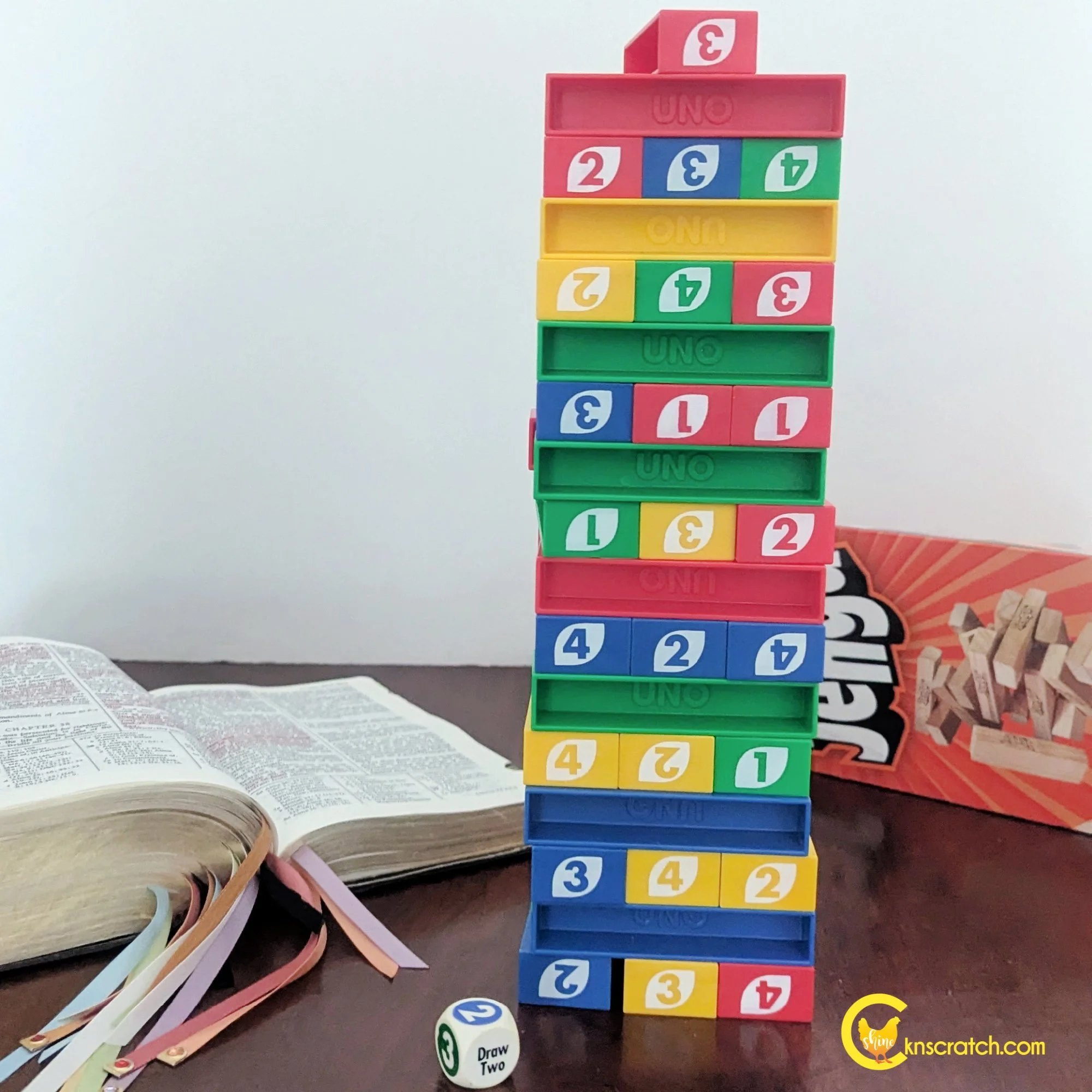
After you teach the scripture story or gospel principle, go through your lesson's questions with Uno Stacko. Once the person correctly answers a quesiton or shares a comment, they get a turn. If the tower falls over on their turn you can choose to do a couple of things: they have to go last next time, they have to answer a question without playing that turn, they have to pick up the pieces and put it back together again, or nothing at all (it's not really about the competition).
This game is especially great for lessons about strong foundations. Note: If you want to cut back on the noise as it falls, bring a tablecloth to play on- you won't be able to move the bottom pieces as easily but it'll be a lot more quiet.
Bean Bag Toss
Cornhole, or bean bag toss, is a simple game for any age. Depending on the maturity of your class, you'll have to put different rules and boundaries like who can retrieve the bean bags.
For the younger ages, invite each person to repeat a phrase from the lesson then toss the bean bag in. For older ones, they earn one bean bag per correct answer or comment. Or the answers and comments can determine how far back they have to stand.
The best part is you can easily transform any cornhole into something else with posterboard or butcher paper. If you are learning about Daniel and the Lion's Den, draw a lion and toss the bean bag into its mouth. If you are learning about Samuel the Lamanite, draw a wall with Samuel off to the side of the hole since all the arrows miss him.
You can vary this game with knocking down stacking cups instead.
Jeopardy
We’re old school and still use papers on the board with their point values. If you don't write the questions, just the points, you can reuse the papers. We really like this reusable Jeopardy board idea too. Many like to make slideshows with Google Docs or PowerPoint or try sites like Jeopardy Labs. You could also use a trivia game site like Kahoot instead- especially if most people have phones in class (might as well put them to good use).
With Jeopardy you are supposed to play where you give the answer and someone buzzes in with the question (try these buzzers for an extra element of fun). We find it's easier and less confusing if you ask the questions instead. If you are up for a challenge though, give a scripture as the answer. Your class has to look up the scripture AND think of the question. This works especially great for reviews.
No need to really keep points but if you want to, everyone starts out with 3,000 points. If they get the answers correct, you add on the points for that question. If they get it wrong, you subtract the points from their total. The winning team or person can choose who says the prayer or doesn’t have to put away the chairs or something.
Bingo or Memory
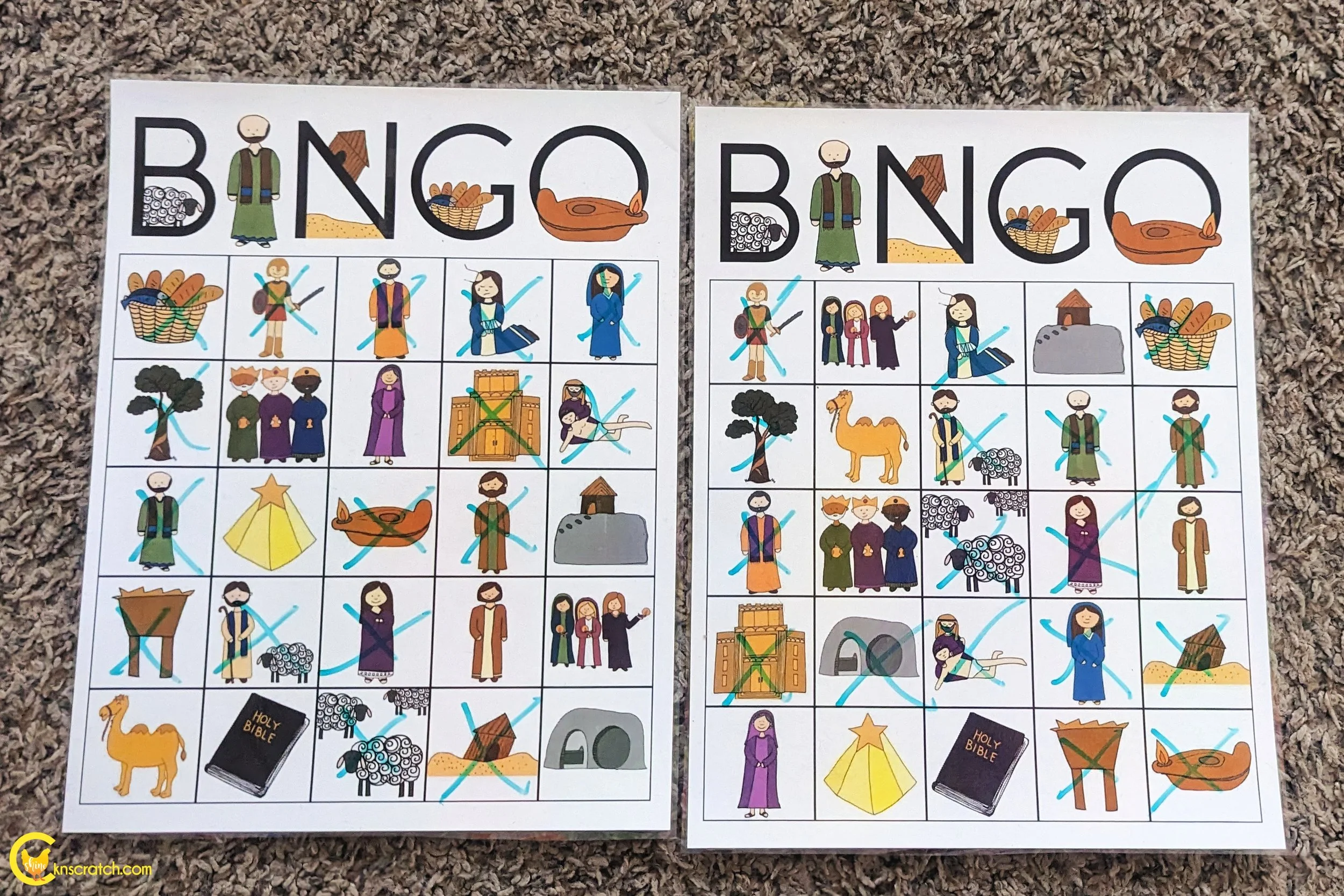
Bingo goes with almost anything. When your class answers a question correctly, they get to play a turn- call out a Bingo card. We like to play Bingo where if someone get a certain type of Bingo by the end of class, we'll bring in a treat next time for the whole class. Sometimes it’s too easy if you are going for just a normal Bingo. We've done it where they have to get an X or a square outline. It makes it more challenging but still fun.
Bring in Bingo boards for everyone or draw one big board on the whiteboard. Try one of our different themed Bingo boards such as Book of Mormon and Choose the Right Bingo.
Make two copies of your calling cards and you have a matching game ready to go too. When a match is made they can go again without answering another question first or ask a silly question like, "What color is your toothbrush?" instead.
Wheel of Fortune
Wheel of Fortune is really another way you can play Hangman with a not so morbid twist. Start your lesson off by having your class discover a key phrase of the lesson or use it to discover the scripture hero you will be discussing. Or use it at the end of your lesson to sum up the overall purpose.
Add an additional element of fun with a prize wheel. People spin the wheel before guessing a letter to determine what kind of question they must answer first. Question examples: past lesson review, application, scripture based, true or false, General Conference review, free pass, etc.
Family Feud
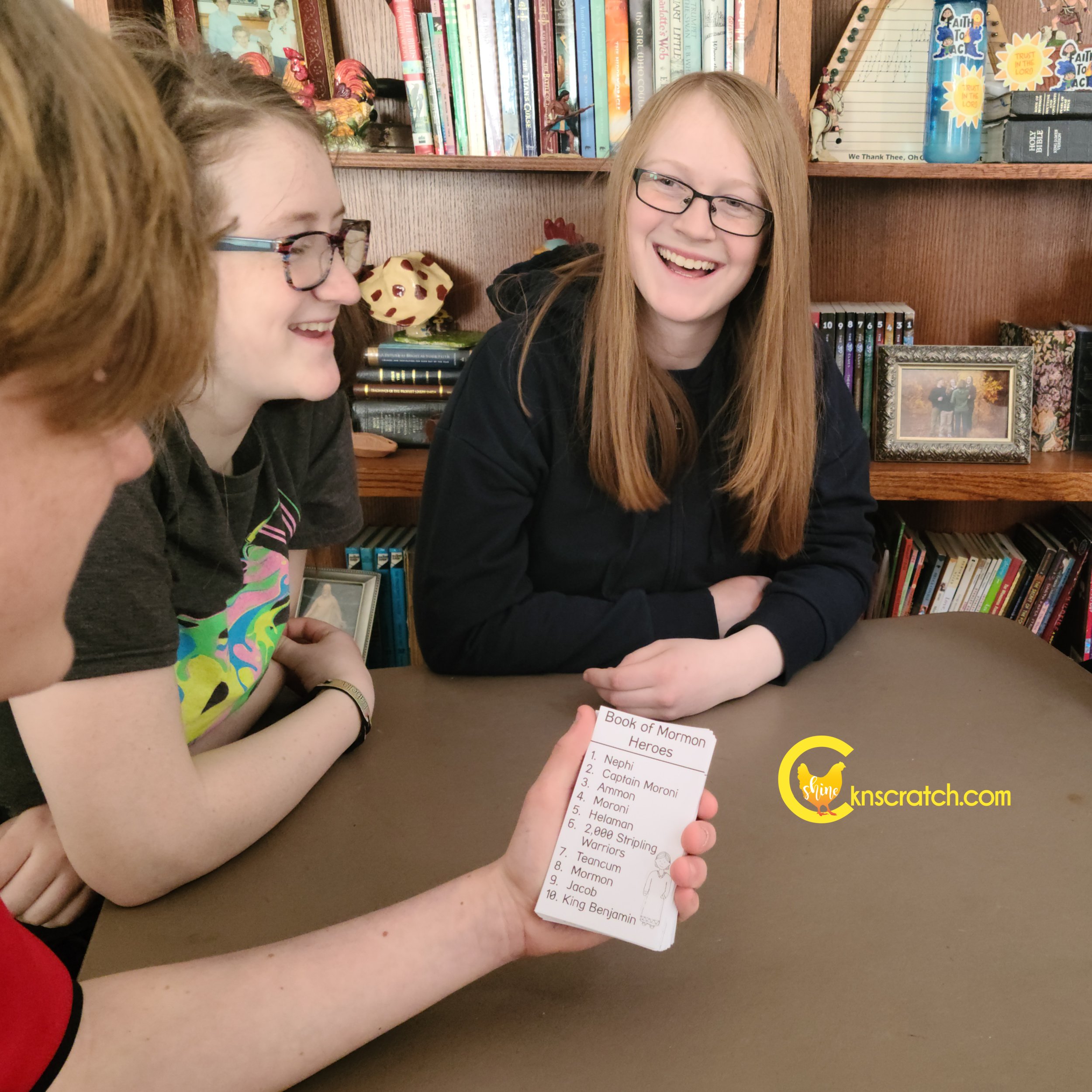
Family Feud is the game where you try to guess the top 10 answers given to a certain question. For example if I asked you what your favorite color is, you'd say what? In Family Feud, you have one person from each team come up to the middle of the room on opposite sides of the table. Put an answer buzzer in the middle. The first one to buzz in and guess the answer closest to the top, gets to finish the round. You can use this in your class by having two teams come up to the middle and answer a question the fastest and keep score that way. This is a great review game.
Take the pressure off a bit and use it to introduce a lesson instead when you use our Shout Out game. Pick a card that goes with your lesson. For example, when you are talking about Alma and Amulek, Paul, or one of the many missionary sections in the Doctrine and Covenants, use one of our cards about missionary work. Invite the whole class to shout out answers together so no one feels singled out. It’s a great way to warm up your class and get them thinking on what the main focus of your lesson will be. Make it bit more challenging by giving them a time limit to guess all 10 answers.
If you are tired of the same old answers every single time you teach, you can also use Family Feud to your advantage. Brainstorm the list with your class or go ahead and write up before the lesson starts, the most used answers on the board or what we often call “the primary answers.” Once a Primary answer is used, cross it out indicating that your class can't use it again for the rest of the class. Some examples of primary answers are: pray, read your scriptures, go to church, repent, etc.
Pictionary or Charades
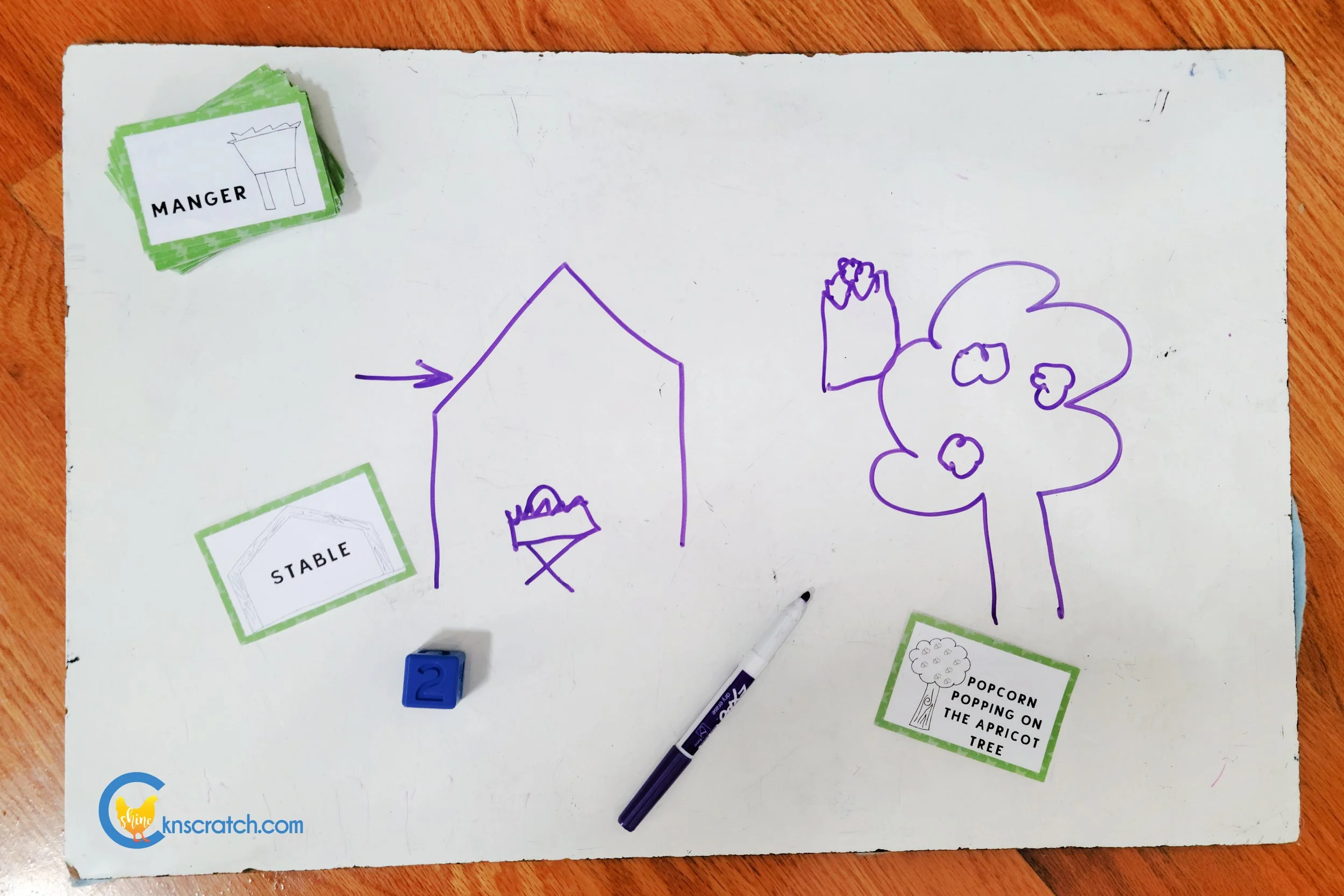
There are so many fun ways to include Pictionary or Charades into your lesson.
One of my favorites is to use when your class doesn't know the answer. Invite someone to come up and act it out or draw it on the board instead of answering it for everyone.
Play a quick game at the beginning of class to introduce what you’ll be talking about first. This works so much better now that families are using Come Follow Me at home- they kind of know what to look for so it’s easier to guess.
Ask an application question and have everyone draw or act out their answer. For example: What is one thing you will share this week? Someone might act out bouncing a basketball or draw a picture of a hug. We love doing it with application questions because it helps them take it home and see how the scriptures help them in life.
Make life easier when you grab our Eyes to See: A Gospel Drawing Game. Over 100 cards at your disposal. Pull out a few that go with your lesson and be ready for some fun in no time.
I Spy
Go through the pictures from your Come Follow Me manuals or your library’s treasure trove. Display several on the whiteboard then play a little I Spy. For younger classes, obviously, keep it pretty basic and simply look for the picture that matches that week’s lesson. For older kids make it harder by putting up pictures that show the application of gospel principles taught through that week’s scripture readings.
Another way to play is to bring one picture and focus in one part of it with your I Spy game. For example, maybe it’s a picture of Jesus Christ healing someone but you want them to focus on the expression of those in the crowd, or one person in particular. Play I Spy to help them find that detail then discuss why would the artist depict it that way. What does it teach us and helps us realize?
Connect 4
Connect 4 is a great one to play teacher against the students. Teach the scripture story or principles first. Then take turns asking each other questions. This allows the students to think of questions which can be just as valuable as answering.
When you answer correctly, insert a checker. First to get four in a row wins. Use the classic Connect 4 game or draw an outline of it on the board and use different colored markers to play. Simplify it even more by by playing Tic-Tac-Toe instead.
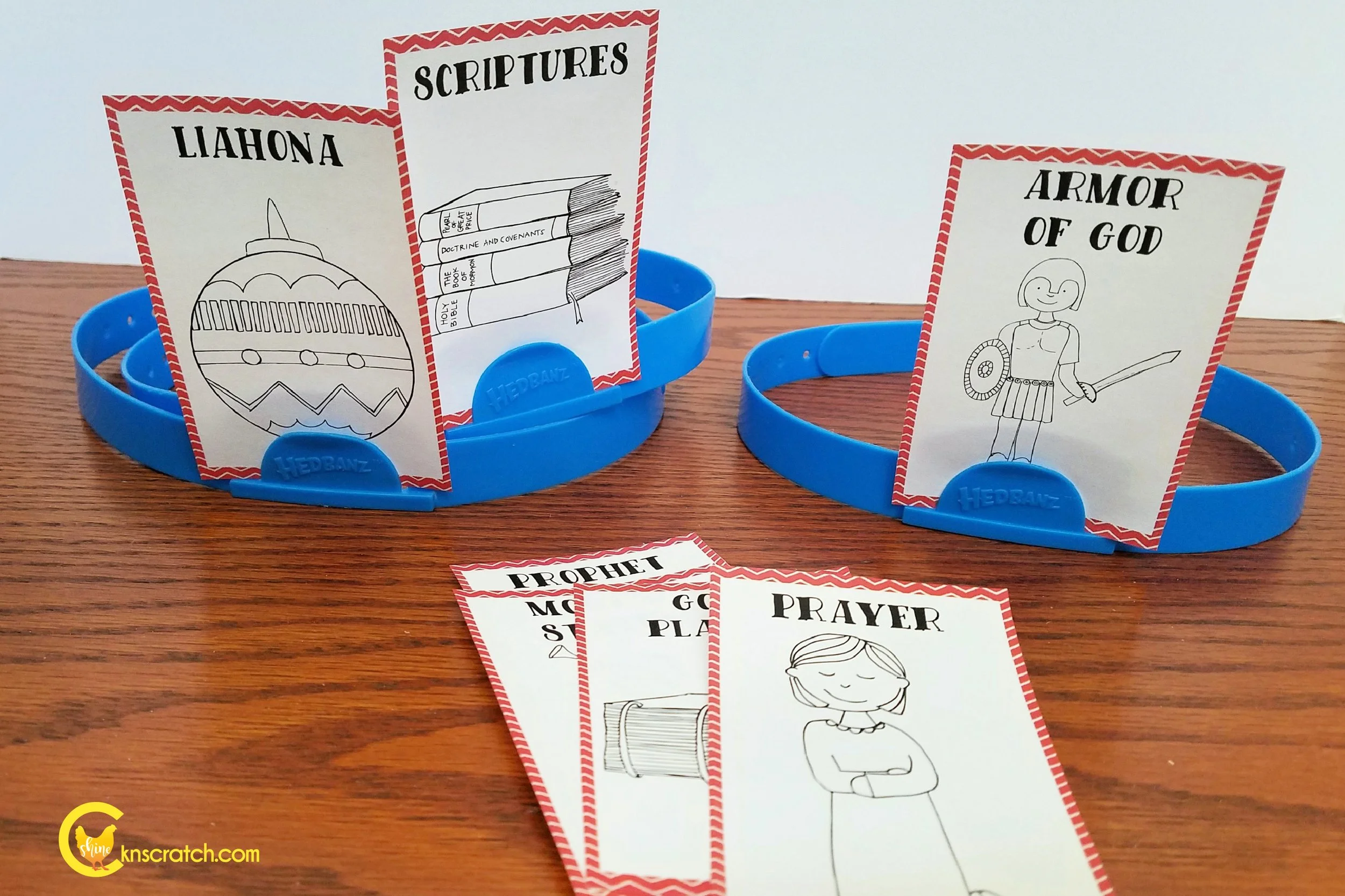
Hedbanz
Each person in HedBanz wears a headband with a card. They then ask yes or no questions to discover what it is. Don't have headbands? Tape it to their forhead or on their back instead.
This game is a great lesson opener or review at the end. You will need to make the cards ahead of time though. Don't worry, you can write words instead of drawing pictures as long as your class can read. Or, get your class to make the cards during your lesson. Invite your class to draw what they think of when... whatever goes with your lesson. 3x5 cards work great for this. Gather, shuffle, and put them randomly on people's heads.
Need some examples to get started? Print our 10 free cards here.
Keep Their Interest Going with Pictures
Need some more teaching tools for your bag? Try these great ways to add pictures to your lesson.


Review Sister Tamara W. Runia’s General Conference talk with this fun watercolor idea